Lenacapavir: The New HIV Prevention Injection Now Available in Nigeria
If you have been following health news recently, you may have come across the name Lenacapavir. And if you have not, this post is exactly what you need to read — because this is one of the most significant developments in HIV prevention in years, and most Nigerians are yet to hear about it.
Staying current with developments that directly affect the health of Nigerian families is part of what we do. Lenacapavir is not just another drug update. It is a genuine shift in how HIV prevention can work for people who have previously struggled with the options available to them.
What Is Lenacapavir?
Lenacapavir is a long-acting injectable medication developed for HIV prevention. It is not a treatment for people already living with HIV — it is a prevention tool for people who are HIV-negative but at higher risk of contracting the virus.
In July 2025, the World Health Organization formally recommended Lenacapavir as an additional HIV prevention option, following the results of two major clinical studies published in the New England Journal of Medicine. Both studies demonstrated high levels of protection in people at substantial risk of HIV infection.
How Does It Work?
This is where Lenacapavir is genuinely different from everything that came before it
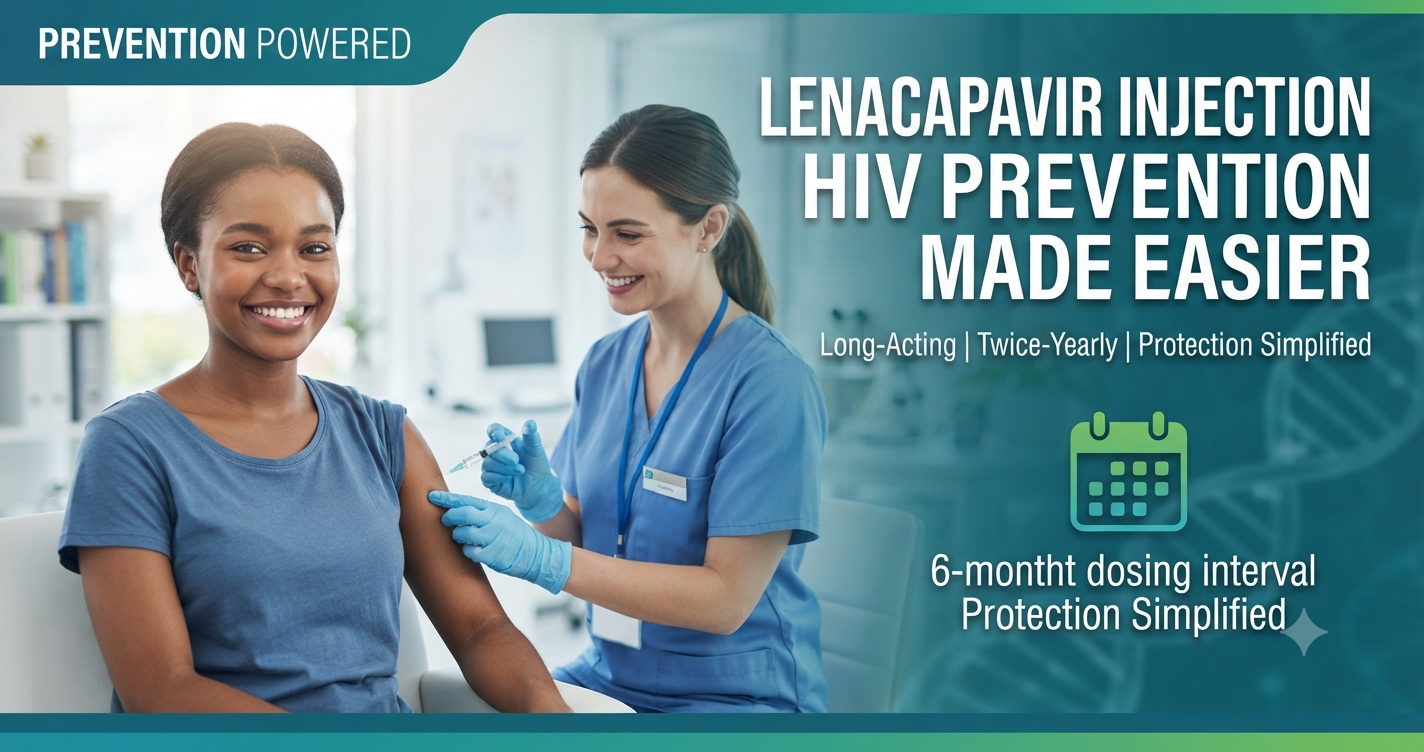
A single injection is administered once every six months. That is two injections per year. The drug targets the HIV capsid — the protein shell that protects the virus and plays a key role in how it replicates inside the body. By disrupting this mechanism, Lenacapavir significantly reduces the risk of HIV infection.
There is no daily pill to remember. No weekly routine. No monthly pharmacy visit. Two injections a year, administered at a designated health facility, and you are protected for the period in between.
Why This Is Different From Daily PrEP
Daily oral PrEP — Pre-Exposure Prophylaxis in tablet form — has been available in Nigeria for several years and has saved lives. It is effective when taken consistently. The challenge has always been that word: consistently.
For many people, taking a daily pill is harder than it sounds. The stigma of being seen collecting medication at a clinic every month can be a serious barrier, particularly in communities where an HIV-related visit to a pharmacy or health facility draws unwanted attention. For others, pill fatigue — the psychological and practical exhaustion of maintaining a daily medication routine — leads to missed doses, which reduces protection.
Lenacapavir addresses both of these barriers directly. It is discreet. It does not require a daily commitment. And because it is administered at a facility rather than self-managed at home, adherence is built into the process. You show up twice a year and the work is done.
A healthcare worker involved in the rollout described the difference simply: some clients do not want to be seen collecting PrEP monthly. An injection given in a private room every few months changes that completely.
Who Is It For?
Lenacapavir is intended for HIV-negative people who are at higher risk of contracting the virus. This includes people in serodiscordant relationships — where one partner is HIV-positive and the other is not — as well as young women, people who have previously struggled to maintain daily medication routines, and other populations identified by WHO as being at substantial risk.
It is worth being clear: this is not a treatment for people already living with HIV. It is a prevention tool. If you are already HIV-positive, your care pathway is different, and antiretroviral therapy remains the appropriate route.
If you are HIV-negative and you or someone you care about falls into a higher-risk category, Lenacapavir is worth asking your doctor or a health professional about.
Where Can You Access It in Nigeria?
Nigeria received its first batch of Lenacapavir doses in March 2026 — 11,520 doses as the first of three tranches, with a total of 52,000 doses expected by 2028, supported by the Global Fund.
The current pilot phase is running across eight states: Benue, Akwa Ibom, Anambra, Ebonyi, Gombe, Kwara, Cross River, and the Federal Capital Territory. The drug is currently available free of charge at designated health facilities in these states.
If you are in one of these states and believe you may benefit from Lenacapavir, the practical step is to visit your nearest government health facility and ask specifically about the HIV prevention programme and access to the injection. Services are being delivered through existing HIV and primary healthcare networks.
For those outside the eight pilot states, the rollout is expected to expand as more doses arrive and more facilities are assessed for readiness. Staying connected to credible health information — including following pages like this one — is the best way to know when access opens in your area.
What Nigeria’s Role in This Global Rollout Means
Nigeria being among the first nine countries globally to receive Lenacapavir is significant context that most media coverage has missed.
It reflects that Nigeria’s HIV response infrastructure — built over decades with support from the Federal Ministry of Health, WHO, the Global Fund, PEPFAR, and civil society organisations — is strong enough to be trusted with an early rollout of a major new prevention tool. More than 70 health facilities across ten states were assessed for readiness before the rollout began. That preparation does not happen overnight.
It also comes at a time when the country is increasing its domestic financing for HIV. The Federal Government committed approximately 346 million US dollars in co-financing in 2026 to support HIV, tuberculosis and malaria programmes. Lagos State has taken it a step further, announcing that it will become the first sub-national government in Nigeria to independently procure antiretroviral medicines — a move toward reducing dependence on donor funding.
None of this erases the very real challenges that remain. An estimated 1.9 million Nigerians are living with HIV. Stigma continues to be one of the biggest barriers to testing, treatment and prevention. And awareness of what is available — including Lenacapavir — remains dangerously low.
What You Should Do Next
If nothing else, take these three things away from this post.
First, know your HIV status. Testing is the starting point for everything. You cannot make informed decisions about prevention or treatment without knowing where you stand. HIV testing is available at government health facilities across Nigeria, and in many places it is free.
Second, share this post. Someone in your network — a family member, a friend, a colleague — may be in a situation where Lenacapavir is relevant to them. The barrier to accessing it may simply be not knowing it exists. You sharing this information could genuinely make a difference.
Third, if you are in one of the eight pilot states and you believe you may benefit from this drug, go and ask. Do not wait for awareness to come to you. Walk into a designated facility and ask specifically about the HIV prevention programme and access to the long-acting injectable.
HIV is preventable. And in Nigeria in 2026, prevention just became a lot more accessible.
Sources: WHO Africa, Vanguard Nigeria, Premium Times, Punch, Federal Ministry of Health and Social Welfare State of the Health of the Nation Report 2025
Promoting Health. Empowering Accountability.
RMA by Olushola | rmabyolushola.com | @rmabyolushola