
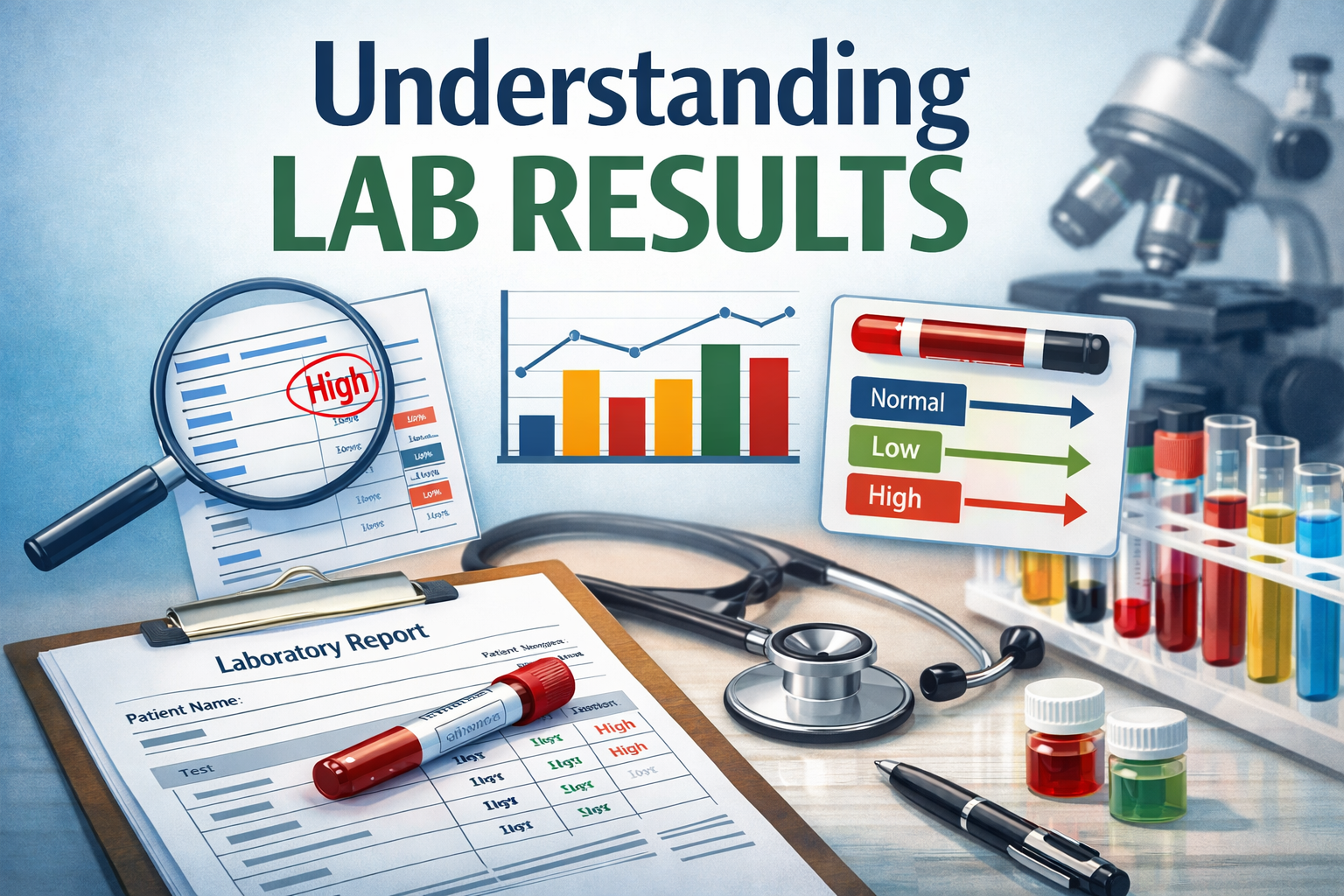
What Your Blood Test Results Actually Mean — A Simple Guide for Nigerians
You finally went to the lab. You got your results. And now you’re staring at a piece of paper full of numbers, abbreviations, and medical terms that mean absolutely nothing to you.
Sound familiar?
You’re not alone. Every day, thousands of Nigerians collect lab results and have no idea what they’re looking at. Some fold the paper and forget about it. Others panic over numbers that are completely normal. And some miss warning signs that could have saved their lives.
That ends today.
What Is a Blood Test?
A blood test — also called a blood work or lab test — is one of the most powerful tools in medicine. It gives your doctor a window into what’s happening inside your body without any surgery.
When you hear terms like CBC, FBS, or LFT — these are all different types of blood tests that check different things.
The Most Common Blood Tests in Nigeria
- CBC — Complete Blood Count
This is the most common blood test ordered in Nigeria. It checks:
a. Haemoglobin (HGB) — carries oxygen in your blood. Low haemoglobin means anaemia. Normal range for adults is 12–17 g/dL.
b∙ White Blood Cells (WBC) — your immune soldiers. High WBC can mean infection or inflammation.
Normal range is 4,000–11,000 cells/μL.
c∙ Platelets — help your blood clot when you bleed. Low platelets can be dangerous.
Normal range is 150,000–400,000/μL.
What to watch: If your haemoglobin is consistently low, don’t just take blood tonic and move on. See a doctor and find out WHY it’s low. - FBS — Fasting Blood Sugar
This test checks your blood sugar level after you’ve fasted for at least 8 hours.
∙ Normal: 70–99 mg/dL
∙ Prediabetes: 100–125 mg/dL
∙ Diabetes: 126 mg/dL and above
What to watch: Many Nigerians are walking around with prediabetes and don’t know it. If your FBS is between 100–125, that’s your warning sign. Change your diet NOW before it becomes full diabetes. - LFT — Liver Function Test
This checks how well your liver is working. It measures enzymes like ALT and AST.
∙ Elevated liver enzymes can mean liver damage, hepatitis, or the effects of medication
∙ Many Nigerians have liver problems from self-medication and herbal concoctions they take without medical guidance
What to watch: If you regularly take pain relievers, herbal mixtures, or alcohol — get your LFT checked at least once a year. - Lipid Profile — Cholesterol Test
This checks the fat levels in your blood.
∙ Total Cholesterol should be below 200 mg/dL
∙ LDL (bad cholesterol) should be below 100 mg/dL
∙ HDL (good cholesterol) should be above 40 mg/dL
What to watch: High LDL is a major risk factor for heart attack and stroke — two of Nigeria’s leading killers. Yet most Nigerians have never checked their cholesterol.
What Should You Do With Your Results?
1. Never self-diagnose. Results must be interpreted by a qualified doctor in the context of your symptoms and history.
2. Don’t ignore abnormal results. If something is flagged as high or low — follow up.
3. Get tested regularly. Even if you feel fine, annual blood tests can catch problems before they become serious.
4. Ask questions. You have the right to understand what is happening in your own body.
The Bottom Line
Your blood test results are not just numbers on paper. They are your body talking to you. Learn to listen. At RMA by Olushola, we believe every Nigerian deserves to understand their health — not just their doctor. Regular routine lab checkups Nigeria are crucial in this understanding. Follow us on Instagram for more health education that speaks your language.
Disclaimer: This article is for educational purposes only and does not replace professional medical advice. Always consult a qualified healthcare provider for interpretation of your results.
Your health is worth the investment — start with a simple lab test today.
It’s very educational
Thank You. Subscribe so you don’t miss our next blog